

Diamond Price Shifts: 2024 to 2026
The diamond market has been in flux. Over the past year, we've seen notable price declines in natural diamonds, a shift from the steady increases of previous years. At the same time, lab-grown diamond prices, while not experiencing the same dramatic drops, have begun to moderate from earlier peaks. This isn't necessarily a sign of lab-grown diamonds becoming 'cheap,' but rather a maturing market.
Several factors are at play. Global economic conditions certainly contribute – discretionary spending decreases when economic uncertainty rises. Adjustments in the diamond supply chain, particularly with major producers like De Beers, are also influencing prices. Perhaps most significantly, consumer preferences are evolving, with more buyers considering lab-grown diamonds as a viable and ethical alternative.
Looking ahead to 2026, predicting exact prices is difficult. However, understanding these current trends provides a solid foundation for comparing costs. This isn’t about forecasting the future, it’s about outlining where we are now and what that means for engagement ring shoppers. We'll examine specific price ranges for both natural and lab-grown diamonds, keeping these broader market forces in mind.
Natural Diamond Pricing in 2026
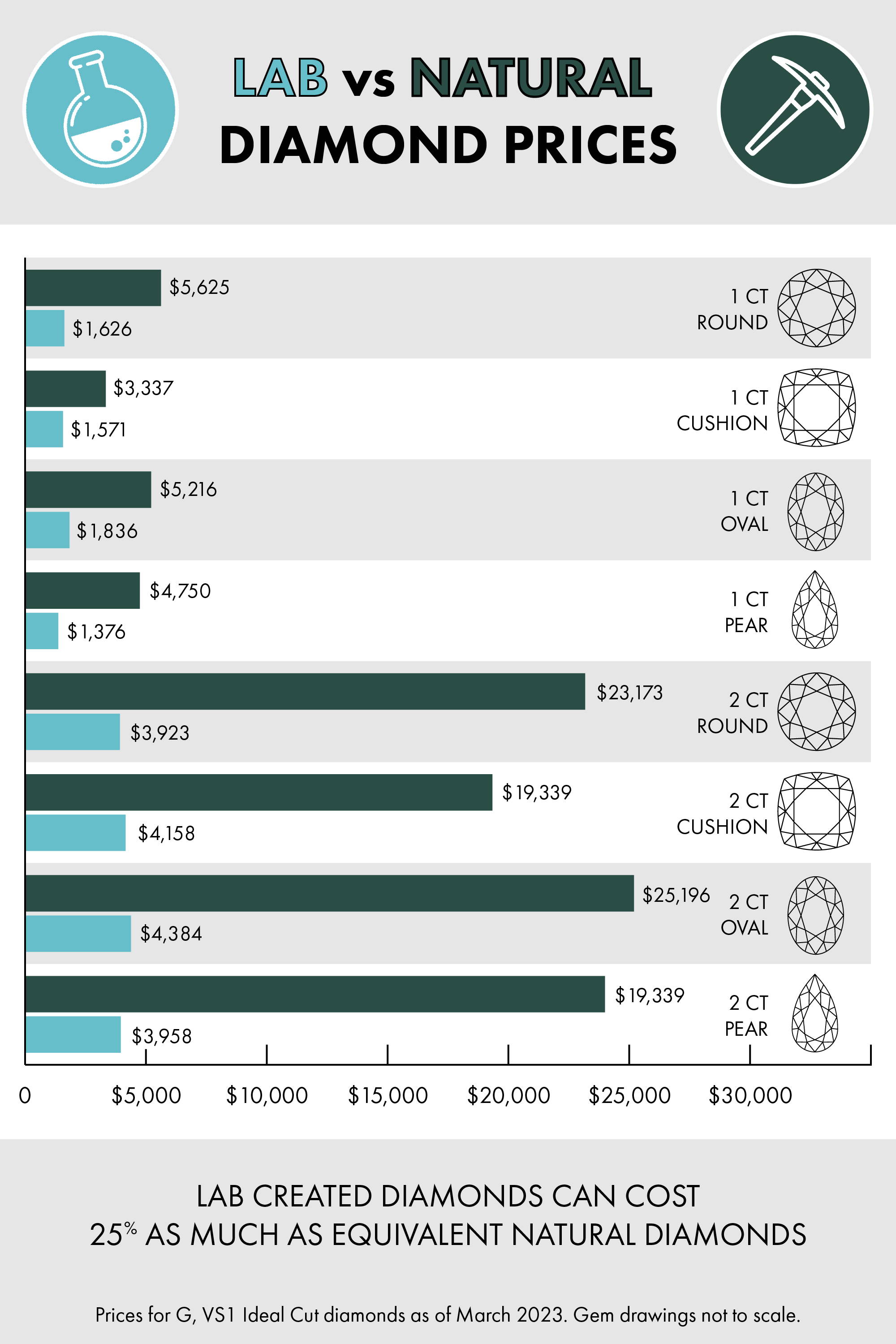
Pricing for natural diamonds in 2026 remains heavily influenced by the '4Cs': Carat, Cut, Clarity, and Color. It’s a complex interplay, and even slight variations in these characteristics can significantly impact the price. Generally, larger carats command exponentially higher prices, and perfect clarity and color are rare and expensive.
For a 0.5-carat diamond, expect to pay between $800 and $1,800 depending on clarity (SI2 to VS1) and color (G to I). A 1-carat diamond in the same range will likely cost $3,000 to $6,500. Stepping up to 1.5 carats, prices jump to $6,000 to $13,000, and a 2-carat diamond can easily range from $10,000 to $25,000 or more. These are, of course, broad ranges.
Cut quality is also essential. An 'Ideal' or 'Excellent' cut will maximize brilliance and therefore cost more. Clarity grades like VVS1 and VVS2 demand a premium, as do colorless grades (D, E, F). Diamond origin can influence price, though often subtly. Diamonds from regions with stricter mining standards, like Canada, sometimes fetch slightly higher prices, but this isn’t always consistent.
It’s important to remember that these are estimates. The market is dynamic, and specific prices will vary depending on the retailer and the diamond’s unique characteristics. StoneAlgo.com provides a helpful tool for comparing prices and understanding the impact of different factors.
Lab-Grown Diamond Pricing: A Deep Dive
Lab-grown diamond pricing also follows the 4Cs, but the price structure differs significantly from natural diamonds. While carat weight still has a major impact, the price increases aren’t as dramatic. Color and clarity also matter, but there’s generally less price variation within comparable grades. This is due to the controlled environment in which lab-grown diamonds are created.
For a 0.5-carat lab-grown diamond, you can expect to pay between $300 and $600, depending on color and clarity. A 1-carat stone will likely fall in the $800 to $1,500 range. For 1.5 carats, prices range from $1,500 to $3,000, and a 2-carat lab-grown diamond typically costs between $2,500 and $5,000. These prices are substantially lower than comparable natural diamonds.
The growth method – High Pressure/High Temperature (HPHT) or Chemical Vapor Deposition (CVD) – can have a slight impact on price. CVD diamonds are generally more common and slightly less expensive than HPHT diamonds, although the difference is decreasing. It's also worth noting that lab-grown diamonds are often graded more leniently on color; a lab-grown 'G' color might appear similar to a natural 'H' color.
Lab-grown diamonds aren’t "cheap’ diamonds – they’re diamonds created differently. They offer a compelling price-to-value proposition, allowing buyers to get a larger, higher-quality stone for their budget. StoneAlgo"s diamond price index is an excellent resource for tracking current lab-grown diamond prices and understanding market trends.
Natural vs. Lab-Grown Diamond Wedding Ring Comparison - 2026 Estimate
| Criterion | Natural Diamond | Lab-Grown Diamond |
|---|---|---|
| Price | High | Medium to Low |
| Rarity | High | Medium |
| Environmental Impact | Medium to Low | High |
| Ethical Concerns | Medium | Low |
| Resale Value | Medium to High | Low to Medium |
| Perceived Value | High | Increasing |
Illustrative comparison based on the article research brief. Verify current pricing, limits, and product details in the official docs before relying on it.
Ring Settings & Total Cost
The diamond is a significant portion of the cost, but the ring setting adds substantially to the total price. Setting styles range from simple solitaire settings to more elaborate designs like halos and three-stone settings. The metal choice – gold, platinum, or palladium – also impacts the price.
A basic solitaire setting in 14k gold can start around $500 to $800. A halo setting, which adds smaller diamonds around the center stone, typically costs $1,000 to $2,000. Three-stone settings are even more expensive, ranging from $1,500 to $3,000 or more, depending on the size and quality of the side stones. Platinum settings are generally more expensive than gold, starting around $1,200 for a simple solitaire.
Diamonds Direct offers a wide variety of settings, with prices varying based on complexity and materials. Customization options, such as engraving or adding unique design elements, will also increase the overall cost. Don’t forget to factor in sales tax and potential insurance costs when calculating your total budget.
It's easy to underestimate setting costs. A beautiful diamond deserves a setting that complements it, but choosing a setting that fits your budget is crucial. Remember that a more intricate setting doesn’t necessarily mean a better ring – sometimes, simplicity is the most elegant and cost-effective choice.
Comparing Total Costs: Real Examples
Let's illustrate these cost differences with a few hypothetical scenarios. These examples assume a preference for VS2 clarity and H color, and a classic solitaire setting in 14k white gold.
$5,000 Budget: With a $5,000 budget, you could purchase a 1-carat natural diamond with VS2 clarity and H color, but the setting options would be limited to simpler designs. Alternatively, you could get a 1.5-carat lab-grown diamond with the same clarity and color, and have more flexibility in choosing a setting.
$10,000 Budget: A $10,000 budget allows for a 1.5-carat natural diamond with VS2 clarity and H color, and a more elaborate setting. With a lab-grown diamond, you could opt for a 2-carat stone with excellent clarity and color, and a truly stunning setting.
$20,000 Budget: At $20,000, you could purchase a 2-carat natural diamond with excellent clarity and color, and a custom-designed setting. With a lab-grown diamond, you could acquire a 3-carat or even larger stone with top-tier specifications and a truly luxurious setting. The difference in what you get for your money is substantial.
Affordable Diamond Wedding Ring Settings on Amazon (Under $800)
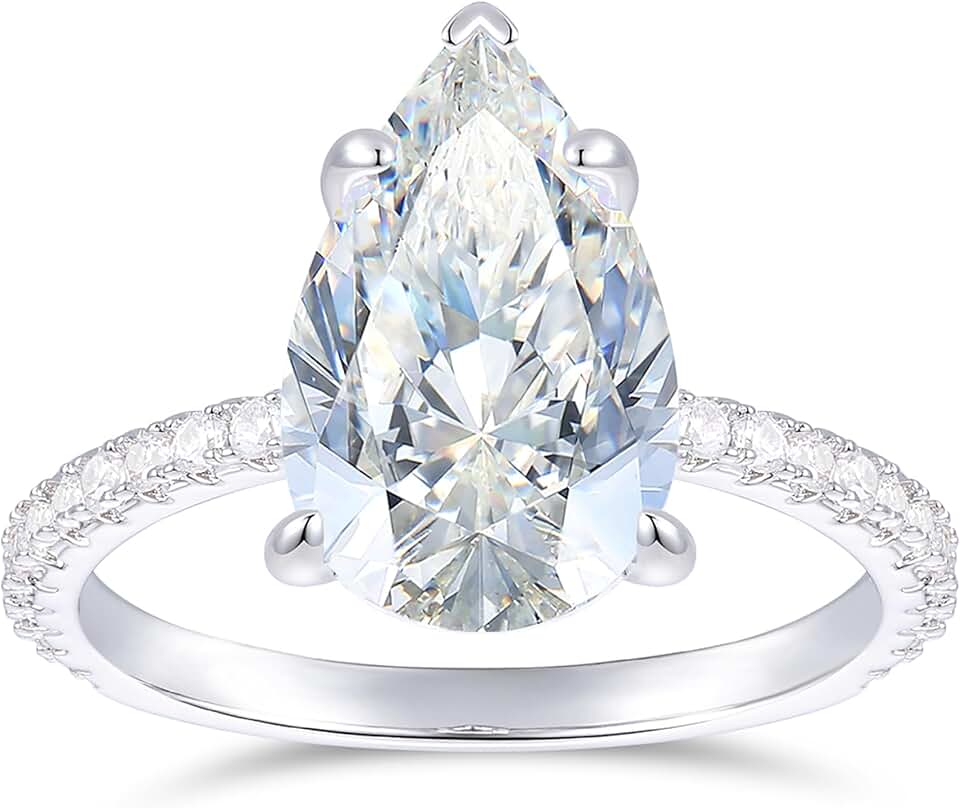
14K White Gold · 3 Carat Pear Cut Moissanite · Hidden Halo Design
This ring showcases a significant moissanite center stone in a classic pear cut, set in white gold with a subtle halo, offering a luxurious look at an accessible price point.

1 Ct Halo Solitaire Cubic Zirconia · 925 Sterling Silver · Available in multiple sizes
A classic halo solitaire design crafted from sterling silver, this cubic zirconia ring provides a timeless aesthetic for those seeking an affordable engagement ring option.

Yellow Gold Plated Silver · Multiple Shape Options (Oval, Pear, Cushion, Princess) · Cubic Zirconia Stones
This ring offers versatility with various popular stone shapes and a yellow gold plated finish, making it an attractive choice for exploring different styles without a high cost.

2-Piece Bridal Set · 14k Rose Gold Plated · Morganite and Diamond Accents
This bridal set features a rose gold plated finish with a morganite center stone and vintage-inspired detailing, providing a complete wedding and engagement ring look at a budget-friendly price.

4ct Round Brilliant Cut Cubic Zirconia · S925 Sterling Silver · Solitaire Design
A substantial 4-carat round brilliant cut cubic zirconia solitaire in sterling silver, this ring offers a dazzling centerpiece for those prioritizing a large stone's visual impact.
As an Amazon Associate I earn from qualifying purchases. Prices may vary.
Resale Value: A Realistic Outlook
Resale value is a critical consideration, though often overlooked. Natural diamonds can retain some value, but it’s typically significantly less than the original purchase price – often 20-40% at best, and sometimes even lower. Factors like diamond quality, market demand, and the original retailer all influence resale value.
Lab-grown diamonds currently have very limited resale value. The market for used lab-grown diamonds is still developing, and demand is relatively low. You shouldn’t purchase a lab-grown diamond as an investment, but rather as a beautiful and ethically sourced gemstone. An engagement ring is, for most people, not a liquid asset.
Ethical & Environmental Considerations
The ethical concerns surrounding natural diamond mining are well-documented. Historically, 'conflict diamonds' (also known as blood diamonds) fueled violence and instability in certain regions. While the Kimberley Process has helped to reduce the trade in conflict diamonds, concerns about labor practices and environmental impact persist.
Lab-grown diamonds offer a more ethically sourced alternative. They are created in a controlled laboratory environment, eliminating the risk of conflict diamonds and reducing the environmental impact associated with mining. However, lab-grown diamond production isn’t without its own environmental footprint – it requires significant energy consumption.
Both natural and lab-grown diamond production have environmental consequences. Natural diamond mining can disrupt ecosystems and contribute to deforestation. Lab-grown diamond production relies on energy sources, which may or may not be renewable. Choosing a diamond with a smaller environmental impact requires careful consideration of these factors.
Future Price Trends: What to Watch
Predicting future price trends is always challenging, but several factors could influence the diamond market in the coming years. Lab-grown diamond prices may continue to fall as technology improves and production costs decrease. However, this decline is likely to slow as the market matures.
The supply of natural diamonds remains relatively constrained, which could help to stabilize prices. Economic conditions will also play a role – strong economic growth typically leads to increased demand for diamonds, while economic downturns can dampen demand. Emerging technologies, such as new diamond cutting techniques or alternative growth methods, could also impact pricing.
Keep an eye on the development of traceability technologies, which can help consumers verify the origin and ethical sourcing of diamonds. Also, watch for changes in consumer preferences – will the demand for lab-grown diamonds continue to grow, or will natural diamonds maintain their appeal? The diamond market is dynamic, and staying informed is crucial for making a smart purchase.
No comments yet. Be the first to share your thoughts!