
Current construction cost trends
Construction costs in 2026 remain elevated compared to pre-pandemic baselines, driven by persistent volatility in material prices and skilled labor availability. While the rapid inflation spikes of 2022 and 2023 have cooled, the market has not returned to the low-cost environment of the previous decade. Instead, costs have stabilized at a higher plateau, creating a new normal for builders and homeowners alike. Understanding this baseline is essential for setting realistic project budgets and avoiding costly surprises during the planning phase.
The primary driver of these sustained costs is the interplay between material supply chains and labor dynamics. Steel, lumber, and concrete prices fluctuate based on global demand and domestic production capabilities, but labor shortages remain a structural constraint. As the construction workforce ages and fewer entrants join the trade, wage pressures continue to push overall project expenses upward. This combination means that even with efficient planning, the cost per square foot for new construction is likely to remain high throughout 2026.
To visualize these shifts, industry experts track construction cost indices that reflect the price of a representative basket of materials and labor. The Mortenson Construction Cost Index, for example, provides quarterly updates on non-residential construction costs across major U.S. geographies. These indices reveal that while some material costs have softened, the overall trend remains upward or flat, indicating that significant price drops are unlikely in the near term. Builders who monitor these trends can adjust their procurement strategies to mitigate risk.
For residential projects, the implications are clear: budgeting must account for a higher floor price. Rather than expecting costs to drop significantly, homeowners and developers should focus on value engineering and strategic material selection. This might involve choosing standard sizes to reduce waste, locking in prices early with suppliers, or phasing projects to spread out labor costs. By acknowledging the current market reality, stakeholders can make more informed decisions and keep their projects on track despite the challenging economic landscape.
Break down direct and indirect costs
Construction costs fall into two buckets: hard costs and soft costs. Hard costs cover everything you can touch. Soft costs cover the paperwork, permits, and professional fees that keep the project legal and planned.
Hard costs: materials and labor
Hard costs are the direct expenses of building the structure. They include materials like lumber, concrete, and roofing, as well as the labor to install them. Equipment rentals and subcontractor fees also belong here. These costs typically make up the majority of the total budget, often ranging from 60% to 70% of the total project cost.
Soft costs: permits and design
Soft costs are the indirect expenses required to get the project started and approved. This includes architectural fees, engineering studies, building permits, insurance, and legal fees. While these costs don't result in physical materials, they are essential for compliance and risk management. Soft costs usually account for 10% to 20% of the total budget.
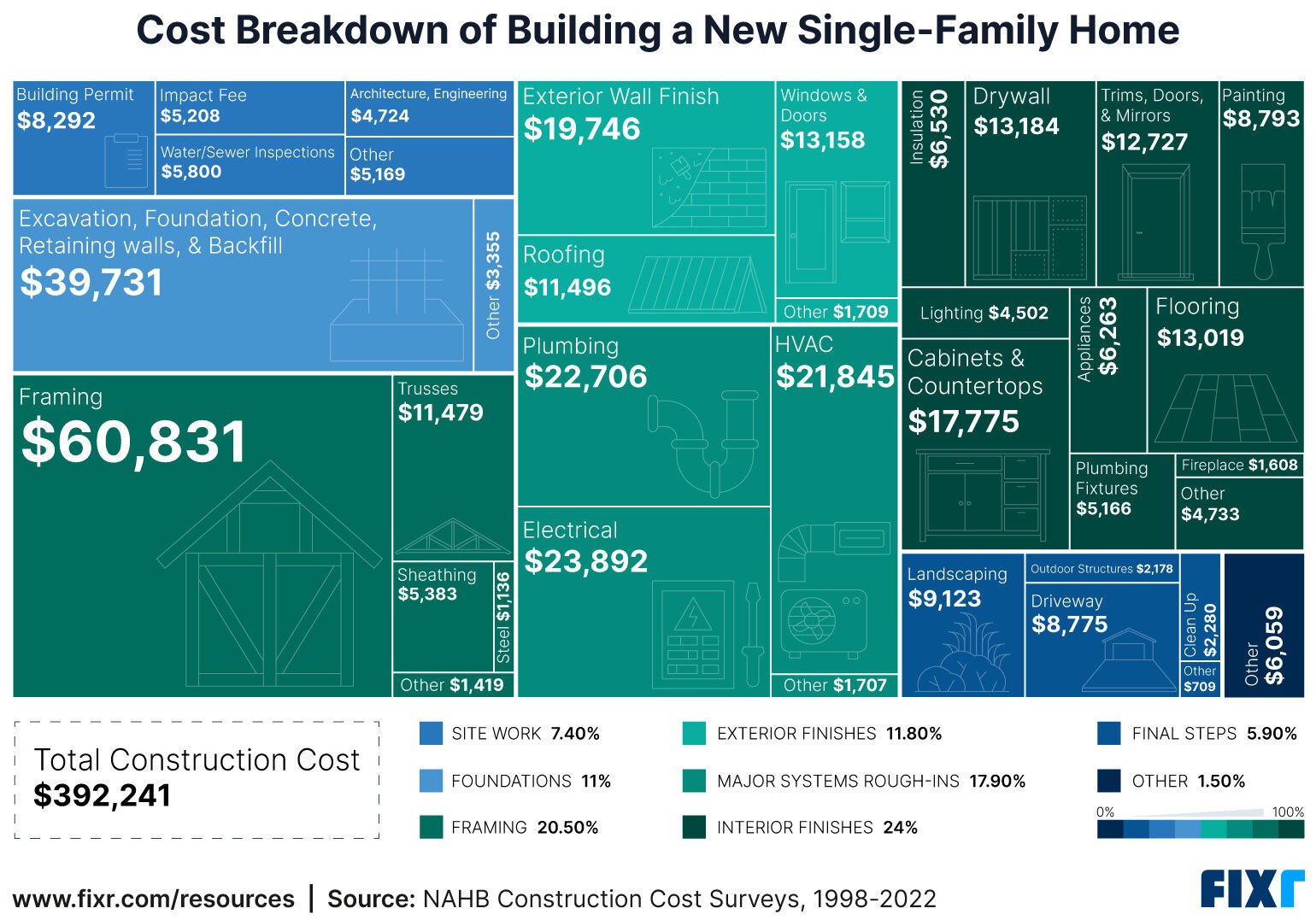
Cost breakdown comparison
Understanding the split between hard and soft costs helps you allocate your budget accurately. The table below shows typical percentage ranges for a standard residential build.
| Cost Category | Typical Range | Examples |
|---|---|---|
| Hard Costs | 60-70% | Labor, materials, equipment |
| Soft Costs | 10-20% | Permits, design, insurance |
| Contingency | 10-15% | Unforeseen issues, changes |
Calculate cost per square foot
The most reliable starting point for estimating your total project budget is the cost per square foot metric. This industry-standard figure allows you to quickly gauge the financial scale of a new build by multiplying your desired square footage by local construction rates. While it is a broad estimate, it provides a necessary baseline before you engage with detailed architectural plans or contractor bids.
National averages offer a general benchmark, but local variables significantly impact the final number. Labor availability, material transport costs, and regional building code requirements can cause prices to vary widely from one zip code to another. For instance, a recent Zillow analysis from July 2024 noted that new construction costs were approximately $3.50 less per square foot than existing homes in comparable markets, highlighting how market conditions shift these baselines.
To get a more accurate projection, you should use a localized calculator that adjusts for your specific state and county. These tools incorporate regional data on labor and materials to provide a rough estimate tailored to your location. You can explore a free cost per square foot calculator on Home-Cost.com to see how your specific region affects the bottom line.
Avoid common budgeting mistakes
Even with accurate material prices, construction projects frequently derail due to planning errors. The most common pitfall is underestimating soft costs. Direct costs cover materials, labor, and equipment, but indirect costs—permits, insurance, utilities, and architectural fees—often account for a significant portion of the total budget. Ignoring these expenses creates a false sense of financial security before ground is broken.
Another critical error is skipping contingency funds. Construction is inherently unpredictable; supply chain delays, weather disruptions, and hidden site conditions can quickly inflate expenses. Industry best practices suggest reserving 10% to 20% of the total budget for unexpected overruns. Without this buffer, a single unforeseen issue can exhaust your funds and halt the project entirely.
Finally, avoid basing your entire estimate on a single source. Construction cost estimating involves adding up both direct and indirect expenses to create a realistic budget. Relying on outdated averages or a single contractor’s quote often leads to gaps in your financial planning. Cross-reference multiple estimates and verify current local rates to ensure your budget reflects the true cost of building.
Finalize your construction budget
A rough estimate is not a contract. Before breaking ground, you need a fixed price that accounts for every material, labor hour, and permit. This section walks you through the final steps of locking in a construction budget, ensuring you avoid costly surprises.
1. Get detailed, itemized quotes
Generic quotes are useless for budgeting. Require contractors to provide a line-item breakdown that separates materials, labor, equipment, and overhead. This transparency allows you to compare bids apples-to-apples and identify where costs are inflated. Use tools like Cost To Build to verify that the quoted prices align with current market rates for your specific region and material choices.
2. Set up a payment schedule
Never pay the full amount upfront. A standard payment schedule ties disbursements to completed milestones, such as foundation pouring, framing, or roofing. This protects your cash flow and gives you leverage if work is delayed or substandard. Ensure the contract specifies a retainage clause, holding back 5-10% until the final punch list is complete.
3. Add a contingency fund
Construction is unpredictable. Hidden site issues, material price spikes, or design changes can derail a tight budget. Set aside 10-20% of your total project cost as a contingency fund. This money is not for upgrades; it is strictly for unforeseen problems that arise once the ground is broken.
4. Monitor costs in real time
Budgeting doesn’t end when you sign the contract. Track every expense against your initial estimate using a simple spreadsheet or project management software. If a category like electrical or plumbing exceeds its allocated amount, adjust other areas immediately. Regular audits prevent small overruns from becoming financial crises.
Frequently asked questions about building costs
Understanding the financial mechanics of construction helps prevent budget overruns before they happen. Below are the most common questions regarding 2026 construction estimates.
For current market indicators and construction material trends, refer to the latest industry reports from official housing authorities.
No comments yet. Be the first to share your thoughts!