

EV Charger Costs: A 2026 Snapshot
Estimating the cost of an EV charging station installation in 2026 involves forecasting. In late 2023 and early 2024, a basic Level 2 home charger installation typically costs between $400 and $2,000. By 2026, prices will likely shift due to inflation, manufacturing improvements, and EV demand. Supply chain issues may also ease.
There are three main levels of EV chargers. Level 1 chargers are the simplest – you can just plug them into a standard 120V outlet. They're slow, adding only 3-5 miles of range per hour. Level 2 chargers, requiring a 240V outlet, are much faster, delivering 12-80 miles of range per hour. DC Fast Chargers (Level 3) are the speed demons, capable of adding 60-80 miles of range in 20 minutes, but they’re expensive and typically found at commercial locations.
Level 2 charger costs are expected to remain competitive, possibly decreasing slightly with higher production volumes. DC Fast Charger costs will likely remain high due to technological complexity. Remember to factor in incentives like federal tax credits and state/local rebates, which can significantly reduce the upfront investment.
The total cost includes the charger, installation, permits, and potential electrical panel upgrades. Get quotes from multiple installers to understand what's included. A good installer will assess your needs and provide a detailed cost breakdown to avoid unexpected expenses.
Residential Charger Installation: Breaking Down Costs
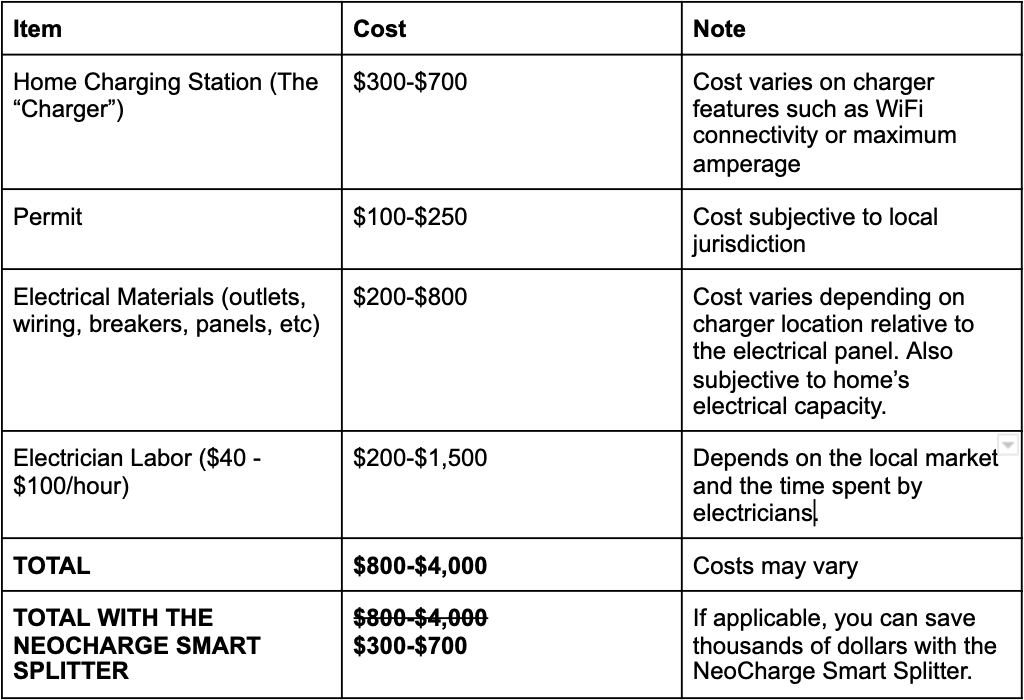
Installing a home EV charger is usually straightforward, but costs vary. A Level 2 charger typically costs $500 to $1,200. An electrical panel upgrade, necessary if your current panel lacks capacity, can add $1,000 to $5,000.
Wiring costs depend on the distance from your electrical panel to the charger. Conduit adds to the expense. Permits typically cost $50 to $300, varying by location. Labor ranges from $200 to $800, depending on your region and installation complexity. A home energy assessment beforehand can identify electrical issues and help select the right charger size.
DIY installation is possible but not recommended unless you are a qualified electrician. Electrical work is dangerous and improper installation can cause fires or vehicle damage. Many permits require a licensed electrician, and DIY installation voids the charger's warranty. The risk is not worth it.
Plan for the future. If you anticipate a second EV or larger battery EVs, install a charger with higher amperage capacity and upgrade your electrical panel. Doing this now is cheaper than redoing it later. A 48-amp or 60-amp charger can be a good investment, even if your current EV doesn't require that much power.
Ensure dedicated circuits for the charger, avoiding shared circuits with high-demand appliances. A dedicated 240V circuit is essential for safe and reliable operation. Choose a convenient and accessible location for frequent use.
Commercial Charger Installation: A Different Ballgame
Commercial EV charger installations are more complex and expensive than residential ones. Costs increase due to higher electrical demand, load management systems, and ADA compliance. A single Level 2 charger installation for a business can cost $2,000 to $6,000, while DC Fast Charger installations can reach tens of thousands of dollars.
Demand charges, imposed by utilities based on peak electrical load, are a major expense for businesses. EV chargers can increase peak demand, leading to higher bills. Load management systems, which distribute power intelligently, can mitigate this and add $1,000 to $5,000 to installation costs.
ADA compliance is required, meaning charging stations must be accessible to people with disabilities, with specific parking space dimensions, signage, and charger heights. Non-compliance can lead to legal issues. Network connectivity for remote management, usage tracking, and payments usually involves a $20-$100 per charger per month subscription fee.
Ongoing maintenance, including regular inspections and repairs, is another cost. A maintenance contract can cost several hundred dollars per charger annually. Businesses can generate revenue from charging fees through various strategies: free charging as an amenity, per-kWh fees, or subscription plans.
Business models for EV charging include offering it as a free perk, charging a fee to cover costs and generate profit, or using subscription plans for unlimited charging. Each model has advantages and disadvantages, so choose what best fits your business needs.
Level 2 vs. DC Fast Charging: A Commercial Application Comparison (2026 Estimates)
| Feature | Level 2 | DC Fast Charging |
|---|---|---|
| Installation Cost | Lower | Higher |
| Ongoing Maintenance | Lower | Higher |
| Charging Speed | Slower | Much Faster |
| Space Requirements | Less | More |
| Target Customer | Employees, Visitors (longer stays) | Transit, Road Trips (quick turnaround) |
| Potential Revenue | Moderate, reliant on dwell time | Higher, faster throughput |
| Grid Impact | Less Significant | More Significant - potential upgrades needed |
| Typical Use Case | Workplaces, Apartments | Highway Rest Stops, Fleet Depots |
Qualitative comparison based on the article research brief. Confirm current product details in the official docs before making implementation choices.
Charger Types & Their 2026 Price Projections
Level 1 chargers currently cost $200-$500. Level 2 chargers from brands like Tesla, ChargePoint, and Wallbox range from $500-$1,200. DC Fast Chargers start around $20,000. By 2026, Level 2 charger prices may fall to $400-$1,000 due to increased competition and economies of scale.
Tesla chargers are known for reliability and integration with Tesla vehicles but are generally more expensive. ChargePoint offers a wide range of residential and commercial chargers with network connectivity and smart features. Wallbox, a European manufacturer, is gaining popularity for its sleek designs and user-friendly interfaces.
Smart chargers, offering remote monitoring, load balancing, and energy usage tracking, cost $100-$300 more than basic models. These features help manage energy costs and optimize charging schedules, potentially outweighing the higher upfront investment with long-term savings.
More chargers are expected to incorporate Vehicle-to-Grid (V2G) technology, allowing EVs to send power back to the grid, potentially stabilizing it and reducing energy costs. V2G technology is still in early development and will likely increase charger costs.
Featured Products
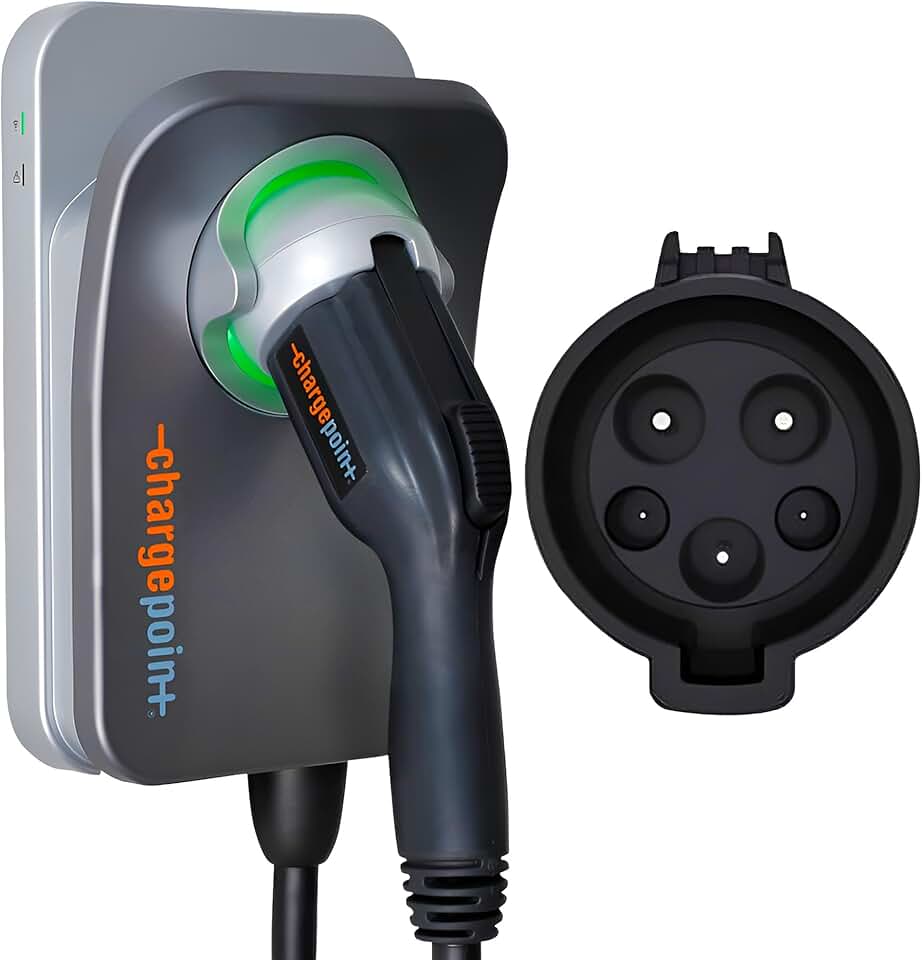
Level 2 charging for faster home EV charging · Smart features for scheduling and monitoring · Hardwired installation for a secure connection
This charger offers smart capabilities and a hardwired option for reliable home charging.

Level 2 charging up to 48A for rapid charging · NACS connector compatible with Tesla vehicles and adapters · UL Certified and Energy Star Partner for efficiency and safety
A popular choice for Tesla owners, this wall connector provides fast charging and energy efficiency.

Level 2 charging up to 40A for efficient charging · Suitable for indoor or outdoor use · Comes with a flexible 25-foot cable and NEMA 14-50 plug
This versatile charger is suitable for various environments and offers a good balance of features and price.
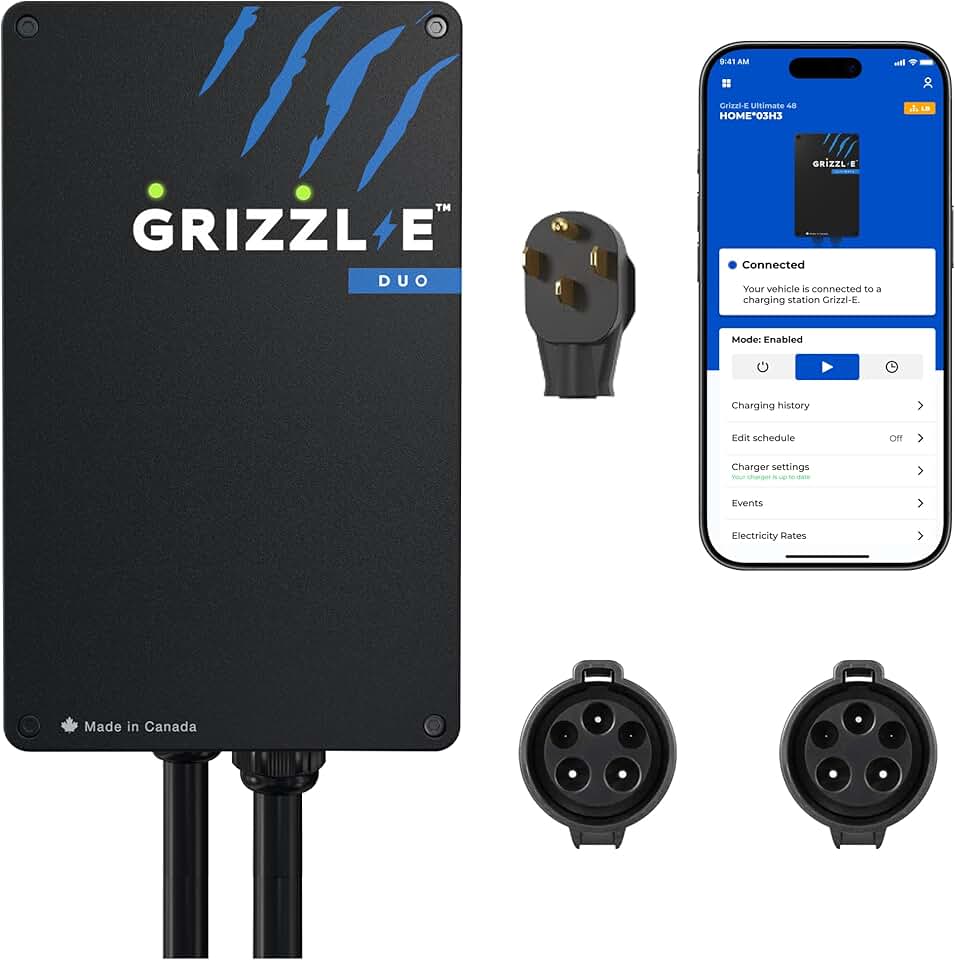
Level 2 charging at 40A for fast charging speeds · Durable metal case for indoor/outdoor use · Smart charging capabilities with Wi-Fi connectivity
The Grizzl-E Duo Connect is a robust and smart charging station built for durability and performance.

Dual charging capability for two EVs simultaneously · Level 2 charging at 40A · Plug-in design with NEMA 14-50 connector for easy installation
This dual charging station is ideal for households with multiple EVs, offering convenience and robust performance.
As an Amazon Associate I earn from qualifying purchases. Prices may vary.
Permitting and Inspection: Hidden Costs
Permitting and inspection fees can add significantly to the total installation cost. Residential permits typically range from $50 to $300, while commercial permits can exceed $1,000. The permitting process varies by jurisdiction; check with your local building department.
Inspection types vary. Residential installations usually need an electrical inspection for safety and code compliance. Commercial installations may require additional inspections, like structural checks. Failed inspections lead to delays and require corrections and re-inspection.
Honestly, navigating the permitting process can be frustrating. Bureaucracy and long wait times are common. Patience and persistence are key. It’s also helpful to have a good relationship with your local building inspector. A proactive approach and clear communication can often expedite the process.
Incentives, Rebates & Tax Credits (2026 Outlook)
Currently, the federal government offers a tax credit for 30% of the cost of an EV charger, up to a maximum of $1,000. This credit is available for both residential and commercial installations. Many states also offer rebates, ranging from a few hundred dollars to several thousand dollars. Utility companies often provide incentives as well, such as reduced electricity rates for EV owners.
Looking ahead to 2026, I expect these incentives to continue, although the specifics may change. There’s a growing political consensus around supporting EV adoption, so it’s unlikely that the federal tax credit will be eliminated. However, the amount of the credit or the eligibility requirements could be adjusted. State and local incentives are more likely to vary, depending on local priorities and funding availability.
To find incentives in your area, check the Department of Energy’s Alternative Fuels Data Center website (afdc.energy.gov). You can also search for incentives on the DSIRE website (dsireusa.org). Be sure to read the fine print to understand the eligibility requirements and application process. Some incentives may have income restrictions or other limitations.
It’s important to factor in incentives when calculating the total cost of an EV charger installation. They can significantly reduce the upfront investment and make EV ownership more affordable. Don’t miss out on potential savings – do your research and take advantage of all the incentives available to you. Keep good records of all expenses and incentive applications for tax purposes.
Future-Proofing Your Installation
When installing an EV charger, it's wise to think beyond your current needs. Choosing a charger with sufficient power capacity is crucial. Even if your current EV doesn't require a high-amp charger, opting for a 48-amp or 60-amp charger can future-proof your installation and accommodate larger battery EVs or a second EV in the future. Upgrading your electrical panel is also a key consideration.
Consider the possibility of adding more chargers in the future. If you anticipate needing multiple chargers, it’s best to install a larger electrical panel and run extra conduit to accommodate additional wiring. This will save you money and hassle down the road. Planning for future expansion is a smart investment.
Choosing a charger that is compatible with different EV models and charging standards is also important. While Tesla chargers are excellent for Tesla vehicles, they may not be compatible with other EVs. Opting for a universal charger that supports both J1772 and CCS standards will ensure compatibility with a wider range of vehicles.
Finally, keep an eye on emerging technologies. Wireless charging and bidirectional charging (V2G) are still in their early stages of development, but they have the potential to revolutionize EV charging. While these technologies may not be widely available yet, it’s worth considering their potential impact on your future charging needs. It’s better to be prepared than to be caught off guard.

No comments yet. Be the first to share your thoughts!