

Home EV Charger Costs in 2026
Right now, in late 2024, installing a Level 2 EV charger at home generally runs between $800 and $2,000, but that's a wide range. Looking ahead to 2026, I expect to see continued price pressure on the charger units themselves, but installation costs will likely remain the biggest variable. Supply chain issues have eased, but inflation could still impact material and labor prices. It’s a bit of a guessing game, honestly.
There are three main levels of EV chargers. Level 1 uses a standard 120-volt outlet – it’s slow, adding only 3-5 miles of range per hour. Level 2, using a 240-volt outlet, is the sweet spot for home charging, delivering 12-80 miles of range per hour. DC fast charging is for public stations and isn’t practical for residential use. We’ll focus on Level 2 for the rest of this guide.
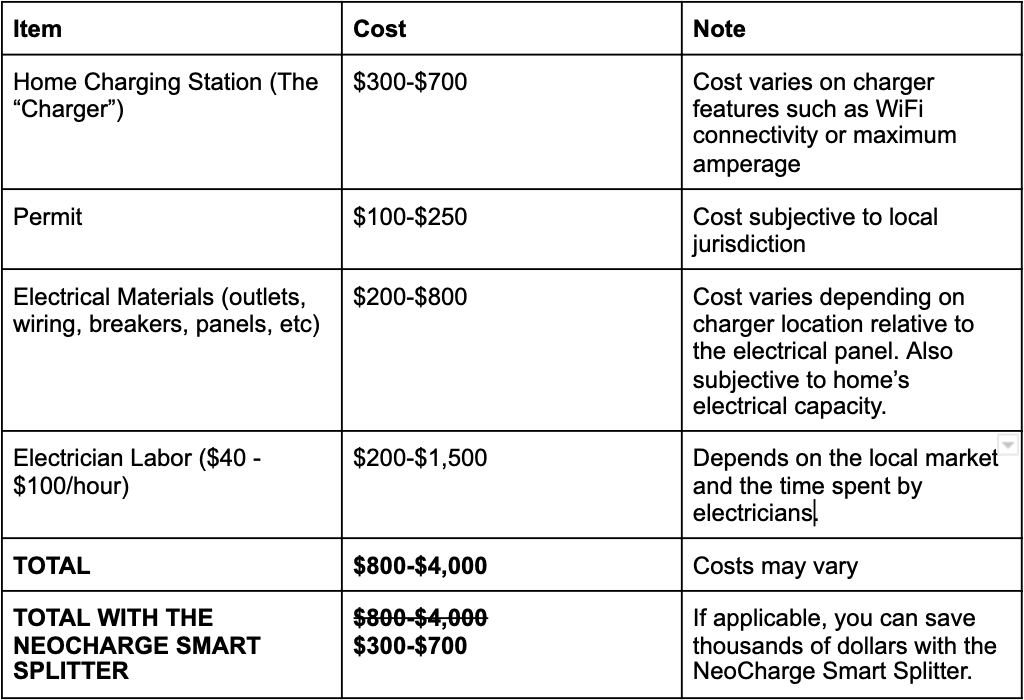
The total cost isn’t just the price of the charger itself. Installation can add significantly to the bill, depending on your home’s electrical system. It can be a simple plug-and-play situation, but it can also require electrical panel upgrades, new wiring, and permits. Being prepared for that range – from relatively inexpensive to surprisingly costly – is the first step in budgeting for home EV charging.
Level 2 Charger Unit Prices
Level 2 chargers vary dramatically in price depending on features and amperage. A basic, non-smart 32A charger currently sells for around $400-$600. By 2026, I’d estimate that price to be in the $450-$700 range, accounting for modest inflation. These are functional, but lack advanced features like scheduling or energy monitoring.
Stepping up to a "smart’ charger – one that connects to Wi-Fi and allows for remote control and monitoring – adds to the cost. The Tesla Wall Connector, for example, currently runs around $600, and I"d project that to be closer to $700-$800 in 2026. Other popular options like the ChargePoint Home Flex (40A) are currently around $650, likely rising to $750-$900. These chargers offer features like scheduling, energy usage tracking, and integration with smart home systems.
Amperage is another key factor. 32A chargers are suitable for most EVs and homes, but 40A or 48A chargers can deliver faster charging speeds – if your car and electrical system can handle it. A 48A charger will naturally be more expensive, potentially adding another $100-$200 to the price. Cord length also plays a role; longer cords provide more flexibility but cost more. The Enel X JuiceBox 40 is a well-regarded option currently around $550, which I expect to be around $650-700 by 2026.
Brand matters, too. Tesla’s Wall Connector is popular among Tesla owners, but it's compatible with other EVs with an adapter. ChargePoint is a well-established brand known for reliability. Other players like Grizzl-E offer high-power options for those who need faster charging. Ultimately, the best charger depends on your specific needs and budget.
- Basic 32A Charger: $450 - $700 (projected 2026)
- Smart 40A Charger (ChargePoint Home Flex): $750 - $900 (projected 2026)
- Tesla Wall Connector: $700 - $800 (projected 2026)
- High-Power 48A Charger: $600 - $900 (projected 2026)
Installation: The Biggest Variable
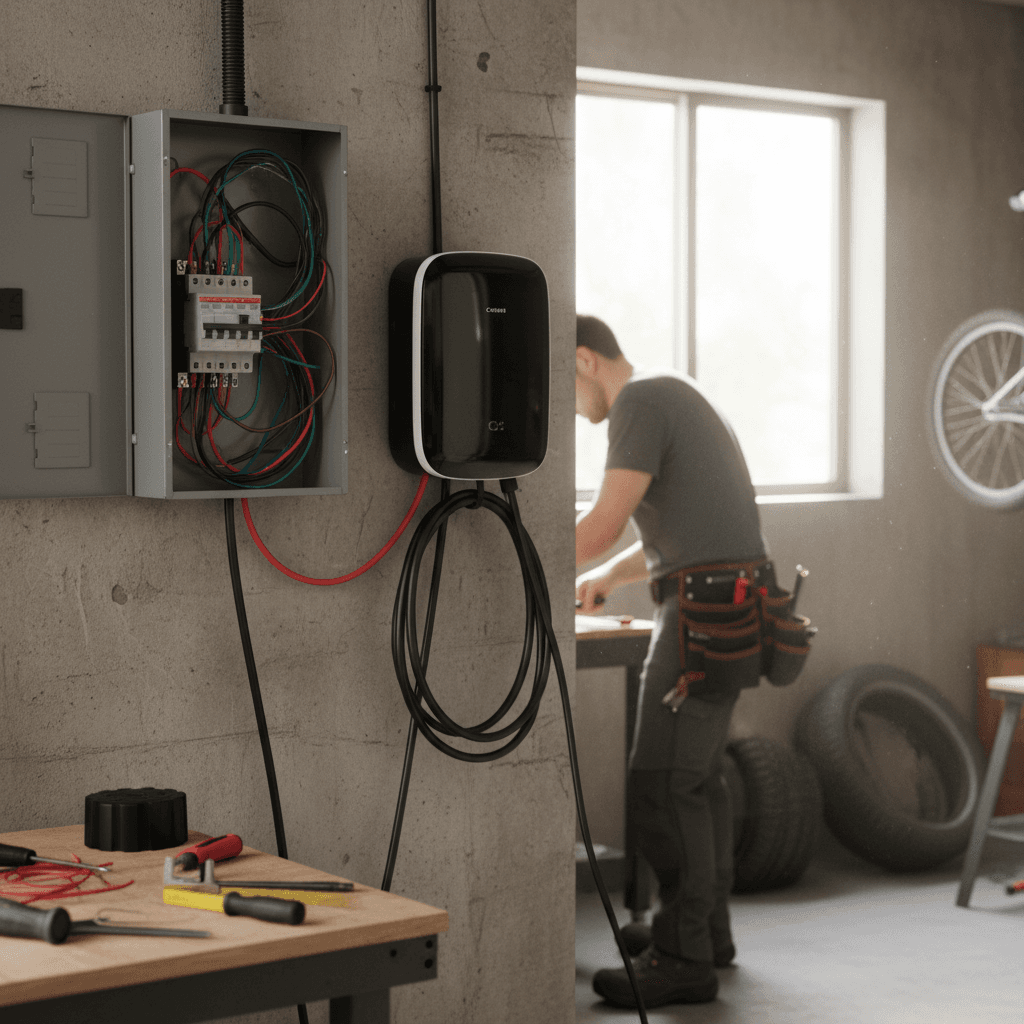
Installation costs are the wild card in the EV charger equation. A simple, straightforward installation – where the charger can be plugged into an existing 240-volt outlet – might only cost $200-$500. But that’s rare. More often, you'll need a dedicated circuit run from your electrical panel, and that's where costs start to climb.
The distance between your electrical panel and the charger location is a major factor. Longer distances require more wiring, increasing both material and labor costs. The need for trenching to bury the wiring also adds to the expense. Expect to pay an extra $50-$100 per foot for trenching. Your electrician's hourly rate, which varies significantly by region, is another key cost driver.
Crucially, your electrical panel’s capacity matters. Most homes don’t have enough spare capacity to handle the additional load of an EV charger. If your panel is full or close to it, you’ll likely need a panel upgrade. A subpanel – a smaller panel installed alongside your main panel – is a less expensive alternative, but still adds to the overall cost. Getting multiple quotes from qualified, licensed electricians is absolutely essential. Don’t just go with the lowest bid; check references and make sure they have experience with EV charger installations.
Don’t forget about permits and inspections. Most jurisdictions require permits for electrical work, and an inspection is typically required to ensure the installation meets safety codes. These fees, while relatively small compared to the overall cost, need to be factored into your budget. Finally, remember to investigate local rebates and incentives – these can sometimes offset a significant portion of the installation cost.
Permitting and Inspection Fees
Permitting requirements for EV charger installations vary widely by location. Some cities and counties have streamlined the process, while others require extensive paperwork and inspections. Costs can range from $50 to $300 or more, depending on the jurisdiction. The National Electrical Code (NEC) provides guidelines, but local codes always take precedence.
You can typically find information about permitting requirements on your local city or county government website. Search for “electrical permits” or “EV charger permits.” The inspection process is designed to ensure the installation is safe and meets code requirements. An inspector will verify that the wiring is correct, the charger is properly grounded, and the installation complies with all applicable regulations.
Skipping permits is a bad idea. It can result in fines, require you to redo the work, and potentially create a safety hazard. It could also invalidate your homeowner’s insurance coverage. A properly permitted and inspected installation provides peace of mind and protects your investment.
Electrical Panel Upgrades: A Deep Dive
If your electrical panel doesn’t have enough spare capacity, you’ll need to upgrade it. Amperage is the measure of electrical current, and your panel has a maximum amperage rating (typically 100A, 200A, or 400A). An EV charger can draw a significant amount of current, especially a 48A charger. Adding that load to an already stressed panel can overload the system and trip breakers.
The cost of a panel upgrade varies depending on the size of the panel and the complexity of the installation. A 100A to 200A upgrade can cost $1,200 to $3,000, while a 200A to 400A upgrade can run $3,000 to $6,000 or more. The brand of the panel (Square D, Eaton, Siemens) also affects the price. Labor costs will also play a significant role.
A load shedding device is an alternative to a full panel upgrade. This device monitors your home’s electrical usage and automatically reduces power to certain appliances (like your water heater or air conditioner) when the EV charger is in use. This allows you to avoid overloading the panel without the expense of a full upgrade. These devices typically cost $500 to $1,500 installed. It’s a smart option to explore if you’re close to your panel’s capacity.
Rebates, Incentives, and Tax Credits
Several rebates, incentives, and tax credits can help offset the cost of EV charger installation. The federal government offers a 30% tax credit for qualified EV charger equipment and installation costs, up to $1,000. This applies to purchases made after January 1, 2023. You can find more information on the IRS website.
Many states and local utilities also offer incentives. For example, California offers rebates through the Charge Ready Home program. New York has Charge NY. These programs often have eligibility requirements based on income, location, or charger type. The Department of Energy’s Alternative Fuels Data Center (afdc.energy.gov) has a comprehensive list of state and local incentives.
Eligibility for these programs can change, so it’s important to check the latest requirements before making a purchase. Some incentives require pre-approval, while others are claimed as a tax credit when you file your taxes. Don’t miss out on potential savings – taking the time to research and apply for available incentives can significantly reduce your out-of-pocket costs.
- Federal Tax Credit: 30% of costs, up to $1,000 (IRS website)
- California Charge Ready Home: Rebates available (check program details)
- New York Charge NY: Incentives available (check program details)
- State and Local Utility Programs: Search afdc.energy.gov for details
Electric Vehicle Charging Station Installation Incentives (2026 Estimates)
| Incentive Name | Level | Amount/Value | Eligibility | Deadline | Link to Application |
|---|---|---|---|---|---|
| Federal Tax Credit (Residential Clean Energy Credit) | Federal | Up to 30% of installation costs, capped at $1,000 | Homeowners installing qualified charging equipment. Equipment must be new and meet certain efficiency standards. | December 31, 2032 (as of current legislation) | https://www.energy.gov/eere/tax-credits/residential-clean-energy-credit |
| California Clean Vehicle Rebate Project (CVRP) | State (California) | Up to $1,000 for Level 2 chargers | California residents, purchase or lease of a new or used eligible EV, and installation by a qualified electrician. | Funding availability dependent; check website for updates. | https://cleanvehiclerebate.org/en |
| Massachusetts Offers Rebates for Electric Vehicle Supply Equipment (MOR-EV) | State (Massachusetts) | Up to $1,000 for Level 2 chargers | Massachusetts residents, businesses, and municipalities. Requires pre-approval. | Ongoing, funding dependent. | https://www.mass.gov/service-details/mor-ev-program |
| New York State EV Make-Ready Program | State (New York) | Covers up to 50% of eligible costs | New York State residents, businesses, and municipalities installing charging infrastructure. | Ongoing, funding dependent. | https://www.nyserda.ny.gov/All-Programs/Programs/Electric-Vehicle-Make-Ready-Program |
| Local Utility Rebates | Local | Varies significantly by utility provider | Customers of participating utility companies. Requirements vary. | Varies by utility; check with your local provider. | Check with your local utility company website |
| Database of State Incentives for Renewables & Efficiency (DSIRE) | Various | Information on incentives available in your state | All US residents. DSIRE is a database, not a direct incentive provider. | Ongoing | https://www.dsireusa.org/ |
Illustrative comparison based on the article research brief. Verify current pricing, limits, and product details in the official docs before relying on it.
Ongoing Costs: Electricity and Maintenance
Once your charger is installed, you’ll have ongoing electricity costs. The cost of charging an EV depends on your local electricity rates and the size of your EV’s battery. As of late 2024, the average cost of electricity in the US is around $0.17 per kilowatt-hour (kWh). A typical EV battery holds around 75 kWh, so a full charge could cost around $13.
Time-of-use (TOU) rates can help you save money on charging. These rates charge less for electricity during off-peak hours (typically overnight) and more during peak hours. If you can schedule your charging to take advantage of off-peak rates, you can significantly reduce your electricity bill. Check with your utility company to see if they offer TOU rates.
EV chargers require minimal maintenance. Occasional cleaning is recommended to remove dirt and debris. Over many years, some components may need to be replaced, but this is relatively rare. Unlike gasoline-powered vehicles, EVs have fewer moving parts, reducing the likelihood of breakdowns and maintenance needs. The charger itself is a solid-state device with few wear items.

No comments yet. Be the first to share your thoughts!