
Diamond Price Shift: 2024-2026
The diamond market has been in flux for the last few years, and that’s not slowing down. Historically, natural diamonds commanded a significant price premium due to their perceived rarity and the complexities of mining. However, the rise of lab-grown diamonds is rapidly reshaping this dynamic. We’re seeing a clear convergence in price, with lab-grown options becoming increasingly accessible.
Several factors are driving this shift. Advancements in laboratory technology have made it possible to create diamonds with virtually identical physical and chemical properties to natural diamonds, but at a lower cost. Consumer perception is also changing; more people are comfortable with the idea of a lab-grown diamond as a beautiful and ethical choice. Supply chain disruptions impacting natural diamond mines have also contributed to the price adjustments.
Predicting prices for 2026 with certainty is impossible – market conditions are always subject to change. But based on current trends, we can expect lab-grown diamonds to continue offering substantial savings compared to their natural counterparts. The rate of that savings will depend on continued technological improvements and evolving consumer demand. This isn't to say natural diamond prices are collapsing, but their growth is certainly being tempered.
Lab-Grown Diamond Costs: The 4Cs
The "4Cs’ – Carat, Cut, Clarity, and Color – are the standard for evaluating diamond quality, and they heavily influence price for lab-grown diamonds as well. However, the price scaling isn"t always the same as with natural diamonds. For example, a slight improvement in clarity might not carry the same price jump in a lab-grown stone.
Carat weight is the most straightforward factor; larger diamonds are more expensive. A 0.5-carat lab-grown diamond with good characteristics might range from $500 to $800 in 2026. A 1-carat stone could be $1500-$2500, while 1.5 carats could land between $3000 and $4500. A 2-carat lab-grown diamond, depending on other factors, could be $5000-$8000. These are estimates, of course.
Cut refers to how well the diamond’s facets interact with light. An Excellent or Ideal cut will command a higher price, typically adding 10-15% to the cost. Clarity grades (Flawless, VVS, VS, SI) impact price significantly; VS2 clarity is often considered a sweet spot – offering good value without visible imperfections. Color grades (D-Z, with D being colorless) also matter, with G-I offering a good balance of price and appearance.
It’s worth noting that lab-grown diamonds often offer better value in higher clarity grades. Because they are created in a controlled environment, achieving flawless or near-flawless clarity is more attainable and doesn’t carry the same price premium as with natural diamonds.
- 0.5 Carat: $500 - $800
- 1 Carat: $1500 - $2500
- 1.5 Carat: $3000 - $4500
- 2 Carat: $5000 - $8000
Estimated Price Range for 1-Carat Lab-Grown Diamonds (2026)
| Cut | Clarity | Color | Price Range (USD) |
|---|---|---|---|
| Excellent | IF | D | Approximately $2,500 - $4,000 |
| Excellent | VVS | E | Approximately $2,300 - $3,800 |
| Excellent | VS | F | Approximately $2,100 - $3,500 |
| Very Good | SI | G | Approximately $1,800 - $3,000 |
| Very Good | VS | D | Approximately $2,200 - $3,600 |
| Good | SI | H | Approximately $1,500 - $2,500 |
| Good | VS | F | Approximately $1,900 - $3,200 |
Illustrative comparison based on the article research brief. Verify current pricing, limits, and product details in the official docs before relying on it.
Natural Diamond Costs: A Baseline
Natural diamonds, formed over billions of years deep within the Earth, have historically been the standard for engagement rings. Their price is influenced by the same 4Cs, but with a greater degree of variability due to the inherent challenges of mining and market dynamics. Expect to pay a substantial premium for a natural diamond compared to a lab-grown one of similar quality.
A 0.5-carat natural diamond with comparable qualities to the lab-grown example above might cost $1200 - $2000. A 1-carat stone could range from $5000 to $8000, and a 1.5-carat diamond could easily exceed $10,000. A 2-carat natural diamond would likely be priced between $15,000 and $25,000 or more.
Natural diamond prices are more susceptible to fluctuations based on supply from major mining operations (like those in Botswana or Russia) and geopolitical factors. Demand, of course, also plays a role. The perceived rarity of natural diamonds contributes to their higher price point, and that perception continues to drive some consumer choices.
Price Comparison: Key Size & Quality Points
Let’s look at some direct comparisons for 2026, keeping in mind these are estimates. A 1-carat, G color, VS2 clarity diamond: lab-grown could fall in the $1500-$2500 range, while a natural diamond of the same specs could be $5000-$8000. That's a significant difference, potentially allowing you to allocate more budget to the setting or other features.
Consider a 0.75-carat, H color, SI1 clarity diamond. Lab-grown options might be available for $800-$1500. A comparable natural diamond could be priced between $2500 and $4000. For a larger stone, say 2 carats, I color, VS1 clarity, the gap widens considerably. Expect to pay $5000-$8000 for lab-grown versus $18,000-$28,000+ for natural.
The potential savings with lab-grown diamonds are undeniable. This allows buyers to get a larger stone, higher clarity, or a more elaborate setting within the same budget. However, it's important to remember that personal preference and emotional value play a role in many purchasing decisions.
Ring Setting & Metal Costs
Don’t forget that the diamond is only one component of the overall cost. The ring setting and metal type significantly contribute to the final price. Solitaire settings, the simplest and most popular choice, generally range from $500 to $2000 depending on the metal and complexity of the design.
Halo settings, which surround the center stone with smaller diamonds, add sparkle and can make the center diamond appear larger, but also increase the cost – typically $1000 to $3000. Three-stone settings, symbolizing past, present, and future, usually fall in the $1200 to $2500 range. More intricate designs, like vintage or custom settings, can easily exceed $3000.
Metal choice also impacts the price. 14k gold is the most affordable option, starting around $800 for a basic band. 18k gold is more durable and lustrous, but also more expensive – typically $1200+. Platinum is the most durable and hypoallergenic option, but carries the highest price tag, starting around $1500 and going up significantly depending on weight and design.
Retailer Markups & Hidden Fees
Retailer markups can vary significantly. Brick-and-mortar jewelry stores generally have higher overhead costs and therefore higher prices. Online retailers, like Blue Nile or James Allen, often offer more competitive pricing due to lower operating expenses. Brand name also impacts price; established brands command a premium.
Be aware of potential hidden fees. Appraisal fees (typically $100-$200) are often required for insurance purposes. Insurance itself adds to the ongoing cost. Resizing can also incur a fee, usually $50-$150. Some retailers may charge a "convenience fee’ or a ‘setting fee".
Negotiating is often possible, especially at brick-and-mortar stores. Don’t be afraid to ask for a discount or to compare prices from different retailers. Reading customer reviews and doing thorough research can help you identify reputable sellers and avoid overpaying.
Amazon Roundup: Engagement Ring Options
Amazon offers a surprisingly wide selection of engagement rings, including both lab-grown and natural diamond options. Here’s a quick look at some current offerings (as of late 2025/early 2026 – prices and availability are subject to change).
Lab-Grown Diamond Solitaire (1ct, G-H, VS2): Around $1600-$2200. Several options from brands like Brilliant Earth and Clean Origin. Natural Diamond Halo Ring (0.75ct, I-J, SI1): $2800-$3500. Available from various sellers. Lab-Grown Three Stone Ring (1.5ct total, F-G, VS): $3500-$4500 from brands like VRAI.
14k White Gold Solitaire (0.5ct Lab Grown): $700-$1000. A more affordable entry point. Vintage-Inspired Lab Grown Diamond Ring: $2000-$3000, offering a unique aesthetic. Natural Diamond Channel Set Band (0.3ct total): $1500-$2000, a good option for a simpler style. Always check customer reviews and seller ratings before purchasing.
Lab-Grown vs. Natural Diamond Wedding Rings on Amazon
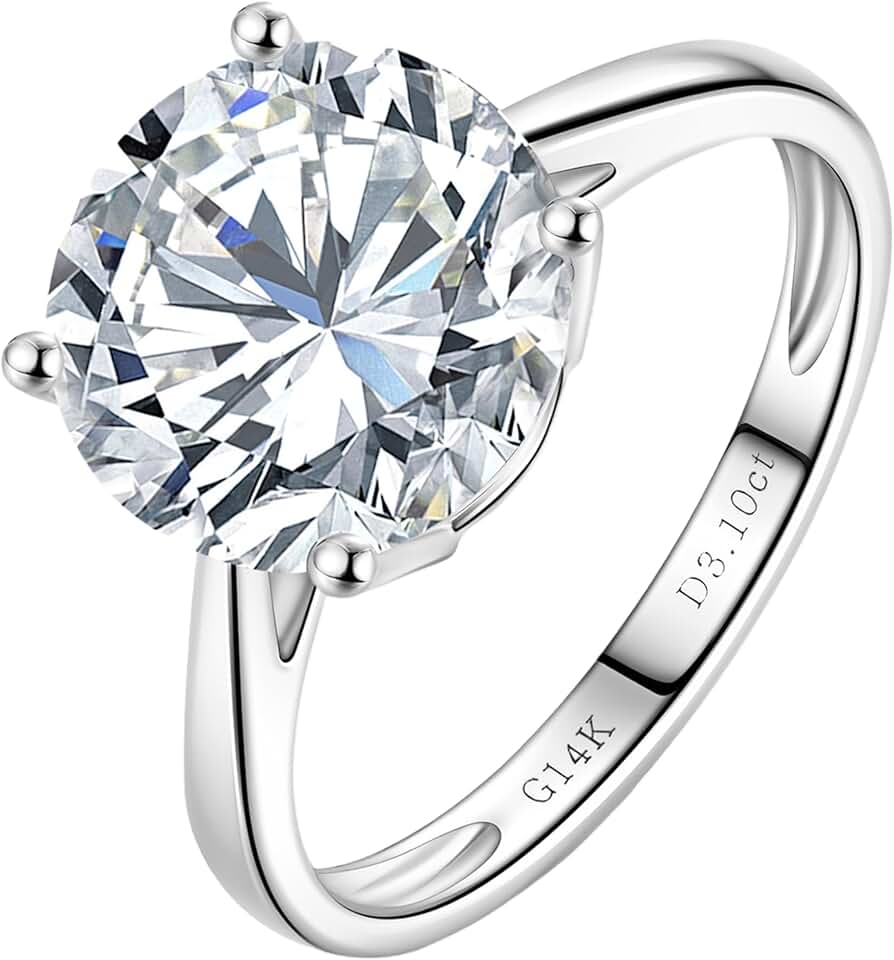
1-3 Carat total weight lab-grown diamonds · IGI Certified, D-E Color, VS1-VS2 Clarity · 14K White Gold, Classic 4-Prong Setting
This ring offers a substantial carat weight and high-quality lab-grown diamonds in a classic setting for comparison.
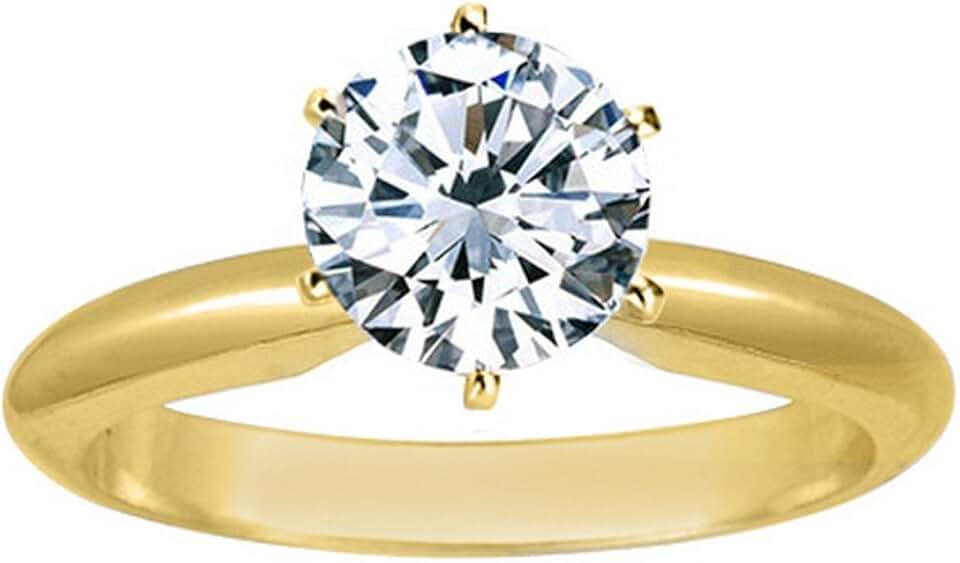
1-2 Carat total weight natural diamonds · K-L Color, I2 Clarity, Very Good Cut · 6-Prong Solitaire Setting
This natural diamond solitaire ring provides a direct price and quality comparison point to lab-grown alternatives.

1-3 Carat total weight lab-grown diamonds · IGI Certified, D-E Color, VS1-VS2 Clarity · 14K White Gold, Halo Setting
This lab-grown diamond ring features a popular halo design, offering a different style comparison.

Princess Cut natural diamond · I-J Color, Eye Clean Clarity · Classic Prong Set
This princess cut natural diamond ring showcases a different diamond shape and higher price point for comparison.

1-5 Carat total weight lab-grown diamonds · IGI Certified, D-E Color, VS1-VS2 Clarity · 14K Two Tone Gold Solitaire Setting
This lab-grown diamond ring offers the largest carat range and a competitive price point in a solitaire design.
As an Amazon Associate I earn from qualifying purchases. Prices may vary.
Future Trends & Price Predictions
Looking ahead to 2026 and beyond, I anticipate that lab-grown diamond prices will continue to be competitive, potentially even decreasing slightly as technology improves and production scales up. We’re already seeing advancements in HPHT and CVD growing methods that could further reduce costs.
The demand for natural diamonds will likely remain stable, driven by tradition and perceived value. However, their price growth will likely be more moderate than in the past. New technologies in diamond cutting and polishing could also impact the market. Ultimately, the choice between lab-grown and natural diamonds will come down to individual priorities, budget, and values.
The development of even more sophisticated lab-grown techniques, such as larger-scale production or improved color and clarity control, could further disrupt the market. It’s a dynamic landscape, and staying informed is key to making a smart purchasing decision.

No comments yet. Be the first to share your thoughts!