
Is Building a Home Still Realistic in 2024?
It’s a question a lot of people are asking right now. Building a home feels… daunting. Construction costs have been climbing, and frankly, the anxiety around affording a new build is very real. You’re likely seeing numbers thrown around everywhere, from around $329,000 to well over $450,000, and it’s easy to feel lost. This guide aims to cut through the confusion and give you a realistic picture of what it costs to build a home in 2024.
According to the National Association of Home Builders (NAHB), the average construction cost for a single-family home is currently $428,215, or about $162 per square foot. That’s the highest NAHB has recorded. But – and this is a big but – your mileage will vary. A lot. Location, size, materials, and design choices all drastically impact the final price. It's easy to get caught up in averages, but those numbers aren't always representative of your project.
Building a home is a huge undertaking, both financially and emotionally. It’s not a decision to be taken lightly, and understanding the costs involved is the first step towards making it a reality. We're going to break down those costs, explore the different factors that influence them, and give you the tools to create a realistic budget. We'll look at everything from materials and labor to permits and hidden fees.
I know it’s stressful. But knowing where your money is going – and being prepared for the unexpected – can make the process significantly less overwhelming. This isn’t about scaring you away from your dream; it’s about empowering you with the information you need to make informed decisions. Let’s get started.
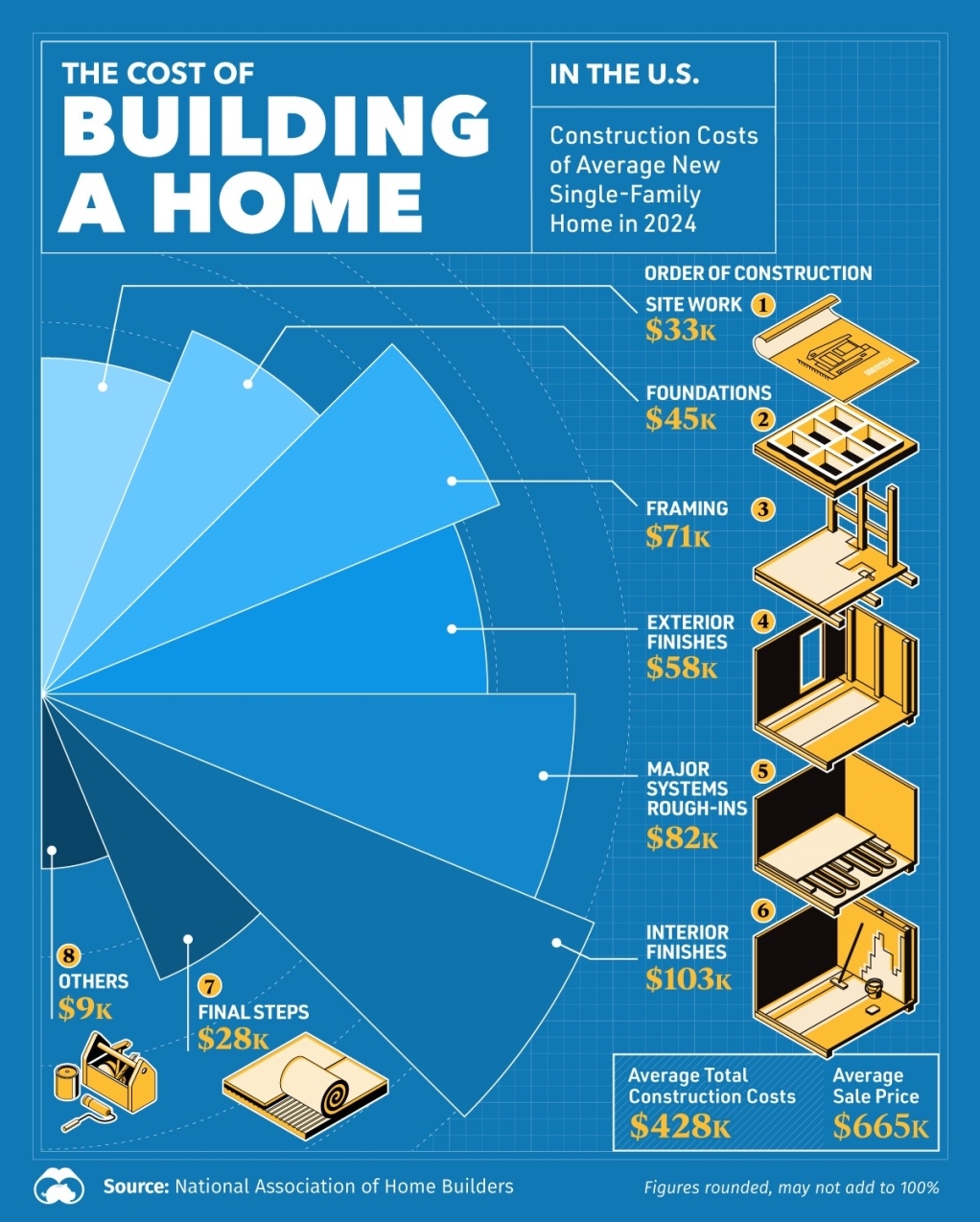
Decoding the $428,215: What’s Actually Included in Construction Costs?
That $428,215 figure from the NAHB is a useful starting point, but it’s essential to understand what it encompasses. This number represents the direct costs of physically building the house – the materials and the labor to get it standing. It doesn't include the land, permits, or a lot of other expenses we’ll cover later.
Let’s break down the major components. Materials – lumber, concrete, roofing, windows, doors, plumbing fixtures, electrical wiring – typically account for around 40-50% of the total construction cost. Labor, including framing, plumbing, electrical work, drywall, and painting, makes up another 30-40%. The remaining percentage covers permits, fees, and site preparation.
Framing specifically, the skeleton of your house, usually accounts for 15-20% of the total cost. Concrete and foundation work can be 10-15%. Roofing materials and installation often fall around 5-10%. These percentages can shift depending on the complexity of the design and the materials you choose. A simple rectangular house will be cheaper to frame than a house with lots of angles and curves.
Supply chain disruptions and labor shortages have been significant drivers of cost increases in recent years. While things have stabilized somewhat, prices remain elevated. For example, lumber prices saw huge swings during the pandemic, and while they’ve come down from their peak, they’re still higher than pre-pandemic levels. Finding skilled tradespeople can also be a challenge, which drives up labor costs. Remember though, the $428,215 is an average, and your location will have a huge impact.
- Materials: 40-50% of total cost
- Labor: 30-40% of total cost
- Permits & Fees: 5-10% of total cost
- Site Preparation: 5-10% of total cost
Estimated Breakdown of New Home Construction Costs - 2024
| Cost Category | Percentage of Total Cost | Average Dollar Amount (Based on $428,215) |
|---|---|---|
| Materials | 38% | $162,721.70 |
| Labor | 35% | $149,875.25 |
| Subcontractor Costs (Plumbing, Electrical, HVAC) | 15% | $64,232.25 |
| Permits & Fees | 5% | $21,410.75 |
| Site Preparation (Land Clearing, Excavation) | 4% | $17,128.60 |
| Land Costs | Varies Significantly | Not Included - Dependent on Location |
| Architectural & Design Fees | 3% | $12,846.45 |
| Contingency (Unexpected Costs) | 7.5% | $32,116.13 |
Data sourced from AI research — verify before making decisions
Cost Per Square Foot: The Myth and the Reality
You’ve probably heard the phrase "cost per square foot’ thrown around a lot when discussing home building. It"s a convenient metric, and it can be a useful starting point for estimating costs. However, it's far from a perfect measure. Relying solely on cost per square foot can lead to significant underestimation and unpleasant surprises.
The national average currently hovers around $150-$162 per square foot, but that range can stretch from $110 to $480 or even higher depending on a multitude of factors. The lower end of that range is typically found in areas with lower labor costs and simpler construction techniques. The higher end represents luxury homes with high-end finishes, complex designs, and expensive materials.
Quality of materials is a huge driver of cost per square foot. Basic builder-grade finishes will be significantly cheaper than custom cabinetry, granite countertops, and hardwood floors. The complexity of the design also plays a role. A single-story ranch house will generally be cheaper per square foot than a two-story house with a complicated roofline. And of course, location matters – labor and material costs vary significantly from state to state, and even within different cities.
It’s important to distinguish between finished square footage and unfinished square footage. Finishing a basement or attic adds significantly to the cost per square foot. A detailed cost estimate is essential – don’t rely on a simple calculation. Get quotes from multiple builders and carefully review the specifications to understand exactly what’s included in the price.
Building Styles and Their Price Tags: From Bungalows to Victorians
The architectural style you choose will have a noticeable impact on your construction costs. Some styles are inherently more expensive to build than others due to their design complexity and material requirements.
Victorian homes, with their intricate detailing, ornate trim, and complex rooflines, typically fall in the $250,000 to $550,000 range. Bungalows and cottages, known for their cozy feel and simpler designs, are often more affordable, ranging from $200,000 to $600,000. However, even within these styles, costs can vary widely based on size and finishes.
A traditional Ranch-style home, with its single-story layout and straightforward construction, generally falls in the $220,000 - $400,000 range. Colonial homes, with their symmetrical facades and detailed moldings, can be more expensive, typically costing between $280,000 and $450,000. Craftsman homes, with their emphasis on natural materials and handcrafted details, can also be pricey, ranging from $250,000 to $500,000.
Modern homes, with their clean lines and minimalist aesthetic, can vary significantly in cost depending on the materials used. A simple, box-shaped modern home can be relatively affordable, but a complex design with large expanses of glass and custom features can be very expensive. The cost can range from $200,000 to $500,000 or more. Ultimately, the best way to determine the cost of a specific style is to get quotes from builders in your area.
Beyond the Build: Hidden Costs You Need to Account For
The construction cost itself is just the tip of the iceberg. There are a lot of other expenses that often get overlooked when people are budgeting for a new home. These "hidden’ costs can add up quickly, so it"s important to be prepared.
Land acquisition is a big one, and its cost varies dramatically depending on location. Permits and impact fees can also be substantial, often ranging from a few thousand to tens of thousands of dollars. Utility hookups – connecting to water, sewer, electricity, and gas – can easily run several thousand dollars. Don't underestimate these costs.
Landscaping, driveway installation, and fencing are often considered afterthoughts, but they can add a significant expense. Appliances, window treatments, and interior finishes are also costs that need to be factored in. And don’t forget closing costs – loan origination fees, appraisal fees, title insurance, and property taxes.
These additional costs account for approximately 35.6% of the total home price, according to recent data. It’s crucial to create a comprehensive budget that includes all of these expenses, not just the construction cost. Failing to do so can lead to financial hardship and a stressful building experience.
- Land Acquisition: Varies greatly by location
- Permits & Impact Fees: $3,000 - $20,000+
- Utility Hookups: $2,000 - $10,000+
- Landscaping & Driveway: $5,000 - $30,000+
- Closing Costs: 2-5% of loan amount
Budget Breakdown: What Can You Get for $100,000, $300,000, and $500,000?
Let’s look at some realistic scenarios based on different budget levels. A $100,000 budget is challenging, but not impossible. It will likely limit you to 600-1,000 square feet of finished living space, and you’ll need to be very strategic about your choices. Expect basic finishes and a simple design. Think smaller footprint and efficient use of space.
With a $300,000 budget, you can comfortably build a home of around 1,200-1,800 square feet with moderate finishes. You’ll have more options for flooring, countertops, and appliances. You might be able to afford some upgrades, like a larger kitchen or a more spacious master bathroom. However, you’ll still need to be mindful of your spending.
A $500,000 budget opens up a lot more possibilities. You could build a home of 1,800 square feet with moderate finishes, or a smaller home (around 1,500 square feet) with high-end features. You’ll have the flexibility to customize the design to your liking and choose premium materials. For example, you could opt for hardwood flooring throughout, granite countertops in the kitchen, and stainless steel appliances.
At the $500,000 level, material choices become much more impactful. Choosing laminate flooring instead of hardwood could save you a significant amount of money. Similarly, opting for standard cabinets instead of custom cabinetry can help you stay within budget. It’s all about prioritizing your needs and making smart choices.
Professional Fees: Architects, Designers, and Project Managers
Don't forget to budget for professional fees. Hiring an architect and/or designer can significantly improve the functionality and aesthetics of your home, but it comes at a cost. Architectural and design fees typically range from 5-15% of the total construction cost.
A project manager can also be a valuable asset, especially if you’re not experienced in construction. They can oversee the entire building process, ensuring that the project stays on schedule and within budget. Project management fees can be structured in a few different ways – hourly, fixed price, or a percentage of the construction cost.
You might also need to hire an engineer for structural design or other specialized services. Engineering fees can vary depending on the scope of the work. While these fees add to the overall cost, they can save you money in the long run by preventing costly mistakes and ensuring that your home is built to code.
Investing in professional expertise can pay off in the form of a well-designed, well-built home that meets your needs and exceeds your expectations.
Builder Profit Margins and Negotiation Tactics
Builders need to make a profit, and in 2024, the average builder profit margin is around 11%, up from 10.1% in 2022. This margin covers their overhead costs, administrative expenses, and of course, their profit. Understanding how builder profit margins work can help you negotiate a fair price.
Getting multiple bids from different builders is essential. This will give you a good sense of the market rate and allow you to compare prices and services. Be clear about your expectations and provide builders with a detailed set of plans and specifications. The more information you provide, the more accurate their bids will be.
Don’t automatically go with the cheapest bid. Consider the builder’s reputation, experience, and quality of work. A lower bid might mean that the builder is cutting corners on materials or labor. Carefully review the contract before signing it, and make sure you understand all of the terms and conditions.
Don’t be afraid to negotiate. Builders are often willing to negotiate on price, especially if you’re willing to make concessions on certain features or finishes. Remember, you’re the client, and you have the right to advocate for yourself.
No comments yet. Be the first to share your thoughts!